· By Victoria Piluso
Why Water-Based Baby Wipes Might Be Making Your Baby’s Rash Worse
Why Water-Based Baby Wipes Might Be Making Your Baby's Rash Worse
You switched to the premium wipes. You checked the ingredients. You paid more for the "99% water" version because it seemed like the safest possible choice for your baby's skin.
So why does the rash keep coming back?
The frustrating answer is that the problem usually isn't the brand, the price point, or even the specific ingredients. For many babies with chronic diaper rash, the problem is the water itself — and understanding why requires a quick look at what's actually happening to your baby's skin at every change.
The Wet-Dry Cycle: Why Water Leaves Skin Worse Off
Healthy skin has a natural lipid barrier — a thin layer of oils and proteins that holds moisture in and keeps irritants out. In the diaper area, that barrier is under constant stress: repeated wetting, wiping, friction, and exposure to the enzymes in urine and stool.
When you clean with a water-based wipe, the water dissolves and lifts waste effectively. But as it evaporates from the skin — which happens within seconds of the wipe being applied — it pulls some of those natural skin oils along with it. Dermatologists call this transepidermal water loss, and in a baby who's being wiped eight to ten times a day, the cumulative effect is significant.
The result is skin that gets progressively drier and more vulnerable with each change. The barrier thins. The surface becomes more permeable. The same enzymes in the next dirty diaper that would barely affect healthy skin now cause real inflammation.
The pH Problem Nobody Talks About
A baby's skin develops what dermatologists call an "acid mantle" — a slightly acidic surface layer with a pH of around 5.0–5.5 that forms within the first days after birth and acts as a natural defence against bacteria and irritants. Standard wipes tend to have a neutral pH of around 7.0. Repeated exposure to a neutral product nudges the skin's pH upward, weakening that acid mantle and making the barrier less effective at every change.
Standard wipes, including water-based ones, tend to have a neutral pH of around 7.0. That might not sound like a big difference, but skin pH is measured on a logarithmic scale — a shift from 5.5 to 7.0 is more significant than it looks. Repeated exposure to a neutral or mildly alkaline product nudges the skin's pH upward, which makes the barrier less effective and the enzymes in waste more aggressive against the skin.
This is one reason why diaper rash can appear even when everything else seems right — the wipes themselves are quietly disrupting the skin's natural defence system at every change.
What's Actually in the Other 1%
The "99% water" label is accurate as far as it goes — but the remaining 1% matters more than the number suggests. To keep a water-based product shelf-stable and free from bacterial contamination, manufacturers need preservatives. Common ones include sodium benzoate, potassium sorbate, and citric acid.
Citric acid presents a particular paradox: it's used to control the pH of the wipe formula itself, but when it contacts baby skin it can lower the skin's pH in an unpredictable way — sometimes helping, sometimes compounding irritation depending on the individual baby's skin chemistry.
Then there's the physical material. Most disposable wipes are made from polyester or polypropylene — synthetic fibres that, even when saturated, create mechanical friction against the skin. For a baby without skin issues this is a minor concern. For a baby with already-compromised skin, that friction at every change is a consistent source of low-grade irritation that prevents healing.
When Fragrance-Free Isn't Enough
Switching to fragrance-free wipes is the right instinct and does help many babies. But fragrance is only one category of potential irritant. The EU's Scientific Committee on Consumer Safety has identified several preservatives commonly found in baby wipes — including certain isothiazolinones — as potential contact allergens even at low concentrations.
The issue is cumulative. A newborn has around eight to ten diaper changes per day. That's up to seventy exposures per week to whatever is in that wipe, applied directly to some of the most permeable skin on the body. For most babies this is fine. For babies with sensitive or eczema-prone skin, even a mild irritant at that frequency can accumulate into chronic redness that no amount of diaper cream seems to resolve.
The Alternative Approach: Oil-Based Cleansing
The dermatological principle behind managing sensitive skin is to cleanse without stripping — and then immediately replace what cleansing removes. For the diaper area, this means using a cleanser that leaves a protective lipid layer behind rather than leaving the skin bare and damp.
Oil-based cleansing works on a different principle to water-based cleansing. Rather than dissolving waste in water and letting it evaporate, oil lifts waste through a process of like-dissolving-like — and because oil doesn't evaporate, it leaves the skin surface coated and protected rather than exposed.
In France, this approach has been the standard of care for generations in the form of Liniment Oléo-Calcaire — a traditional blend of olive oil and limewater that has been used in French maternity hospitals and nurseries for decades. The limewater component neutralises the acidity of waste on contact. The olive oil cleanses and simultaneously leaves a breathable lipid barrier that protects the skin until the next change.
It's a fundamentally different relationship with baby skin — one that treats every diaper change as an opportunity to support the skin barrier rather than stress it.
A Note on What to Look For
If your baby has chronic diaper rash that persists despite switching wipes, it's worth considering an oil-based alternative. Look for short ingredient lists, no synthetic fragrance or preservatives, and independent certification — the National Eczema Association's Seal of Acceptance is one of the most rigorous independent standards available for baby skincare products.
The goal at every diaper change is simple: leave the skin cleaner, calmer, and better protected than you found it. For a lot of babies, water-based wipes — however pure — just can't do that.
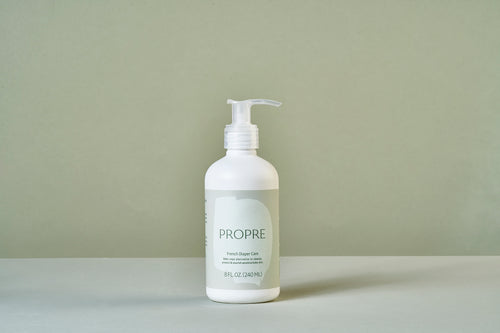
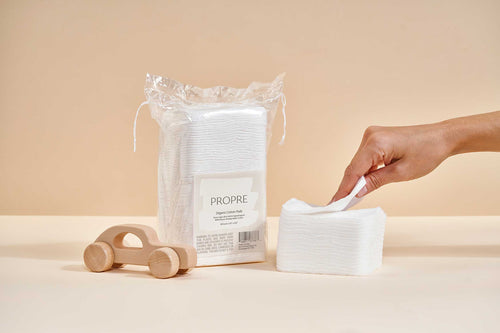
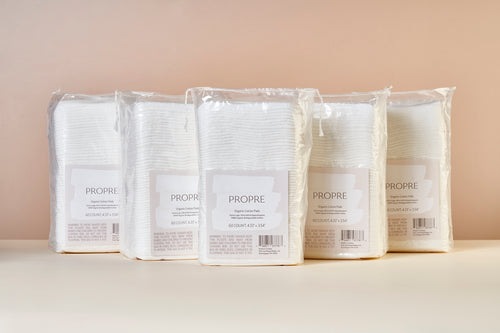
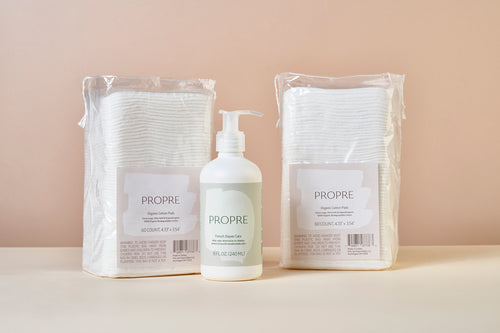
Propre Baby French Diaper Care is an oil-based liniment carried the NEA Seal of Acceptance, made to EU organic standards. If you'd like to try it, the Starter Bundle is here.